


Parasites are microorganisms that live and feed on other organisms.Parasites often cause harm to the host.It is customary to subdivide parasites into species such as zooparasites and plant parasites.Zooparasites include protozoa, helminths, arachnids, insects and others.Plant parasites include bacteria, fungi, some higher plants and others.
Viruses are also parasites.In most cases, to live, parasites need to change two or three hosts, in which they cause exhaustion of the body and its weakening.Often lead to the death of the owners.Most parasites are the causative agents of many human diseases.In medical terminology, parasites include any creatures that lead a parasitic lifestyle.The exceptions are bacteria, viruses and fungi.
Diagnosis of parasites in humans
There are a number of human diseases that are caused by parasites such as protozoa, parasitic worms, arthropods and pathogenic microorganisms.Protozoan parasites include amoebas, leishmania, lamblia, plasmodium, trypanosomes, balantids, pneumocystis, toxoplasmia and others.To parasitic worms - helminths.Arthropods include insects and mites.And pathogenic microorganisms include bacteria and spirochetes that parasitize ticks, fleas, lice, pathogenic fungi and viruses.
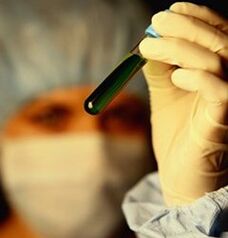
The main goal of parasites is to hide their existence.That is, they live undetected in the host's body.Testing for parasites involves observing their release (amoebas, segments, worms, pinworms) or the products of parasite reproduction (eggs, protozoan cysts).Diagnosis is performed on feces, urine, sputum, or human body tissue (blood and lymph nodes).
Let us highlight a list of studies that are used for this:
- histological coprogram;
- histological analysis;
- immunological (serological) tests;
- microscopy (hemoscanning);
- electroacupuncture methods (ART - vegetative resonance testing).
Analysis using the histological coprogram method involves diagnosing thin sections of a stool sample using optical systems.It makes it possible to clearly identify parts of the bodies of helminths, their eggs and the membranes (cuticles) of the larvae.Thus, helminthiasis is detected.An additional feature of this method is to determine the type of parasites found.
More effective is a serological blood test, which detects antibodies to helminths.This method is also called an immunological (serological) test.The essence of the test is to use various sets of chemical reagents and markers.They are used to identify certain types of antibodies and antigens of parasites in human blood.Immunological testing is carried out only in medical laboratories.
Microscopic analysis is based on the use of dark-field, fluorescent and electron microscopes.This diagnostic makes it possible to study living or fixed microscopic objects, as well as cellular and subcellular structures.
The electroacupuncture method is based on the use of special devices to identify basic data on the state of human health.This method examines different areas of the skin.
Histological analysis is a common method for examining stool for the presence of parasites of various kinds.In most cases, it is used to determine helminthic infestations in human biomaterial.Can be performed for adults and children.
Hemoscanning (blood examination) makes it possible to determine the state of the main elements of blood and the purity of its plasma.When taking a test for parasites, which is based on this method, the blood is not processed (that is, it is not dried or stained).Its study is carried out using a microscope, which is connected to a video camera.Next, the sample of the material under study is magnified under a microscope by 1800-2000 times.At this moment, the monitor broadcasts the resulting image, and also provides the opportunity to take photographs or video.Hemoscanning allows you to obtain data on the state of the immune system and its activity, as well as identify the presence of bacteria, fungi and helminth larvae.
VRT (vegetative resonance test) is based on the phenomenon of biological resonance that forms between the drug and the human body.Such a drug acts as information carriers of the frequencies of various types of parasites.In 1989, all the frequency data of various parasites, fungi and viruses were discovered and recorded.It is this type of research that provides the opportunity to assess a person’s condition at a given point in time.That is, to establish the level of immune system disorders, as well as viral and bacterial loads on the human body, remove toxins, reduce the body’s reactions to various antigens and allergens, and much more.
In the laboratory where the analysis is carried out using the ART method, special attention is paid to determining the level of eosinophils.It is their overestimated indicator that indicates the presence of allergic reactions that are caused by parasitic infestations.Eosinophils are a type of white blood cell that can detoxify bacteria.They take part in allergic processes in the human body and can be stained with acidic dyes.That is, in other words, eosinophils are markers of parasitic invasions in the normal state of human immunity.
Parasite analysis - which one is better?
There are many types of tests, and which one is best is determined by the attending physician.The most commonly used tests are blood and stool tests to detect various types of parasites.Among blood tests for parasites, the following types can be distinguished:
- blood test for lamblia;
- blood test for opisthorchiasis pathogens (detection of IgG antibodies);
- blood test for echinococcus pathogens;
- blood test for pathogens of toxocariasis;
- blood test for trichinosis pathogens;
- blood test for ascariasis pathogens.
The material for research in all of the above methods is blood, which is taken from a vein.
The research material for identifying helminths is feces.Because it is most often and easier to detect them there.
Who needs to get tested?
A blood test for parasites is offered to such patients who complain of a decrease in general health.As is known, there are hundreds of families that parasitize the human body.Many of them produce toxins that poison the blood.Some reduce the amount of nutrients.And at the same time, diseases that occur as a result of the vital activity of parasites are difficult to identify.Because the symptoms are similar to the manifestations of many diseases.A blood test makes it possible to determine the amount of antibodies and specific immunoglobulins in the human body.They are the ones who act as parasitic markers.
In many cases, blood diagnostics are additionally carried out using the PCR (polymerase chain reaction) method.This study is considered effective and reliable.Its main advantage is the advantage of identifying many types of diseases at a time when other diagnostics are powerless.
It is also recommended to take a blood test for parasites in preparation for vaccinations, during pregnancy and after completing a course of anti-parasite therapy.This analysis must be done several times (immediately after treatment and after one to three months).